
Library

Blog: Ask Isa: Unexpected Pregnancy
By Isa Gucciardi, Ph.D.
Question: I’m pregnant and I’m having a hard time connecting to my child. I wasn’t planning on getting pregnant and I’m not sure how I feel about it. What can I do to feel more connected to my child?
Isa: First of all, there isn’t anything wrong with you if you don’t feel connected to your child right away. This is a huge moment in your life, and you need to give yourself all the time and space you need for this pregnancy to fully register for you.
If you can’t connect with your child immediately, it’s likely because you need to take time to explore the ways you’re going to change as you become a mother. In order to connect with your child, you first have to connect with yourself. If you don’t put your own emotional and physical needs first, it will be more difficult to connect. Focusing on yourself in this way is not selfish, but will actually be beneficial for your child.
When preparing for motherhood, it is essential to reflect on what being a mother means to you and to consider how having a child is going to affect your everyday life. I recommend looking at your own definition of “mother” and examining the way you were mothered. If you have been well-mothered, reflect on what values you might emulate as a mother for your child. If you were not mothered well, there may be places within you that need healing.

Special Announcement: Depth Hypnosis Pilot Study Featured in The International Journal of Regression Therapy
There is much anecdotal evidence about the efficacy of Depth Hypnosis, based on the many reports of thousands of people who have been helped with the modality. In 2014, Dr. Joanna Adler, a long-time Depth Hypnosis Practitioner, set up the Depth Hypnosis Research Project to measure the efficacy of Depth Hypnosis in addressing symptoms of depression, anxiety, symptoms of post-traumatic stress disorder, and in increasing well-being.

On the Air: Inner Truth Podcast: Psychedelics: Your Questions Answered with Isa Gucciardi
Through weekly conversation, Inner Truth brings together leading thinkers, speakers, and healers that are at the forefront of these questions. The discussions are aimed to inspire deep internal inquiry and positive change in the lives of listeners. In this week’s episode with plant medicine expert Isa Gucciardi, you’ll discover:
• How to know if/when plant medicine is right for you
• How to frame and phrase your intention
• The best way to set yourself up beforehand
• How to interpret the experience afterwards
• What practices help get the most out of the journey
• The most common mistakes + how to avoid them
• Some incredible stories of breakthrough insights + emotional healing
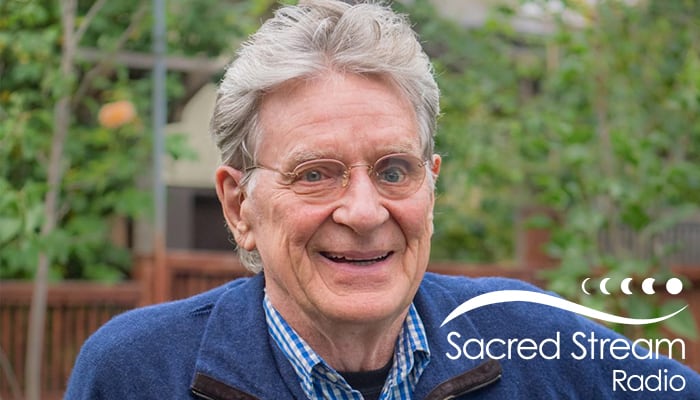
Podcast: Episode 49: Robert Thurman: In Conversation: Part 1
On this episode, Laura Chandler speaks with bestselling author and scholar, Robert Thurman, who was in town for the Science and Non-Duality Conference in San Jose (SAND). Bob is a recognized worldwide authority on religion and spirituality, Asian history, and Indo-Tibetan Buddhism. He is the co-founder of Tibet House and the author of many books, including Infinite Life and Why the Dalai Lama Matters. In this interview, Bob and Laura talk about the conference, his latest book, a graphic novel about the Dalai Lama – Man of Peace: The Illustrated Life History of the Dalai Lama of Tibet, and some of Bob’s favorite subjects, like the dogma of materialism, the absurd belief that nothing exists, and how Buddha actually discovered relativity.

Blog: Mindful Leadership: An Interview with Hal Adler
Hal Adler is a certified Depth Hypnosis Practitioner and Executive Coach. In this interview, Hal talks about his upcoming Mindful Leadership workshop at the Sacred Stream Center, and why mindfulness is an essential practice for anyone in a leadership position.

Blog: Ask Isa: Can Depth Hypnosis Help Me with My Anxiety?
By Isa Gucciardi, Ph.D.
Question: Can Depth Hypnosis help me with my anxiety?
Isa: People often feel their anxiety controls their lives, but in reality, it always has something important to teach you. Depth Hypnosis can help you understand the roots of your anxiety, and when you know where your symptoms began, you can change your relationship to the original situation driving your anxiety.

Podcast: Episode 47: 2018: A Retrospective
In this episode, Laura Chandler takes a look back over the past year of interviews, revisiting key moments with inspiring guests that include renowned channel Paul Selig, activist and former nun Margarita Melville, and the exquisite electric cellist Jami Sieber. And you’ll also hear some new conversations with Robert Thurman and Lama Tsultrim Allione.
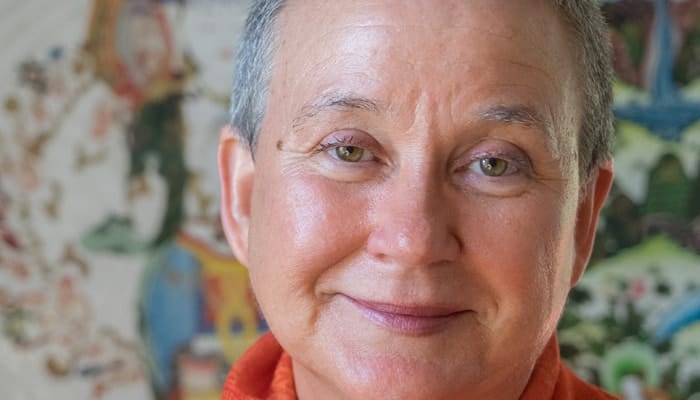
Blog: Coming to Peace: An Interview with Isa Gucciardi, Ph.D.
Q: What is the Coming to Peace process?
Isa: Coming to Peace is a conflict resolution process designed to address both external and internal conflict. In this process, each person is empowered to share the truth of the conflict from their perspective, and to create space for everyone involved to do the same. Everyone is encouraged to connect to internal resources of wisdom, to practice patience and tolerance, and to move toward harmony when confronted with vengeance, prejudice and hatred.
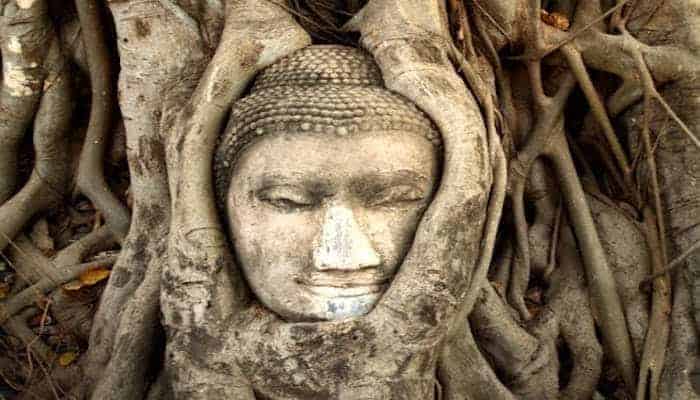
Blog: How to Connect With Your Wise Self
By Isa Gucciardi, Ph.D.
The “Wise Self” is the part of you that is always calm, peaceful, nonjudgmental, and compassionate. In Buddhism, this part of the self is called your “Buddha Nature.” It is a witness to all the experiences you have, and it cannot be broken or damaged. When you are connected to this part of yourself, you can rest in the present moment and be aware of what’s happening around you without feeling pulled in.
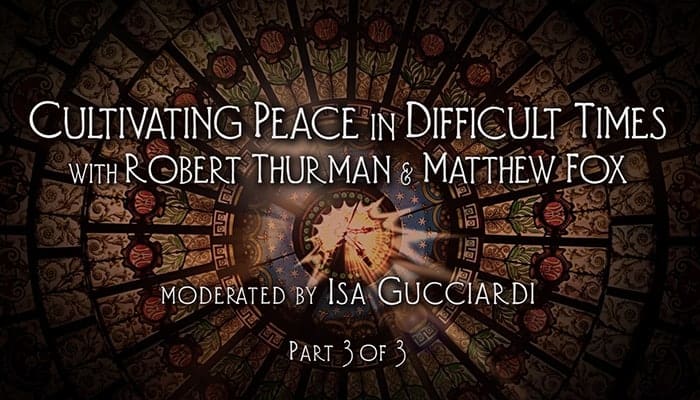
Video: Robert Thurman and Matthew Fox: Cultivating Peace in Difficult Times (Part 3)
In part three of this historic meeting, leading Buddhist scholar Robert Thurman and Christian theologian Rev. Matthew Fox, discuss the men and women who inspire them, including the Dalai Lama, Gandhi, Meister Eckhart, and Hildegard of Bingen. They offer insight into creating more compassion in our lives and hope for cultivating a more compassionate world. Robert Thurman is the co-founder of Tibet House U.S., bestselling author, and recognized worldwide as an authority on religion, spirituality, Asian history, Tibetan Buddhism, and the Dalai Lama. Matthew Fox is an expert on Christian mysticism and Creation Spirituality. He has written over 35 books and is the bestselling author of The Coming of the Cosmic Christ. Isa Gucciardi moderates this talk that takes place at the Sacred Stream Center, a school for consciousness studies, in Berkeley, CA.
Podcast: Episode 46: Lama Tsultrim Allione
On this episode, Laura Chandler is joined by author and Tibetan Buddhist teacher, Lama Tsultrim Allione. Lama Tsultrim is currently on a European book tour to support her latest book, Wisdom Rising: Journey into the Mandala of the Empowered Feminine. In this conversation, Lama Tsultrim talks about the mandala practices in her book and her focus on making certain practices of Tibetan Buddhism relevant and impactful for contemporary practitioners. She also addresses many current political and spiritual topics, including sexual misconduct by spiritual teachers, the #metoo movement, and the role of women spiritual teachers in Tibetan Buddhism.

Blog: Ask Isa: Can Depth Hypnosis Help Me Get Over My Breakup?
By Isa Gucciardi, Ph.D.
Question: I broke up with my boyfriend a while ago, but the pain still feels overwhelming. I’m not moving on at all. Part of me wants to be back in a relationship and part of me is relieved it’s over. Can Depth Hypnosis help me get over my breakup and move on?
Isa: What you’re describing sounds like an internal split, where part of you wants to be in the relationship and part of you does not. The tension and lack of resolution between these two parts is probably what’s making it hard for you to move on. Journaling can be a very helpful tool for understanding these two conflicting parts of yourself. For example, you can list all the reasons you want to be in the relationship, and then list all the reasons you are relieved to be out of the relationship. As you do this, the position of each part will become clear.
On the Air: Therapist Clubhouse: Making Business Sacred with Isa Gucciardi
If you believe being of service or being spiritual doesn’t go with making money, this conversation is for you. Isa Gucciardi, the creator of Depth Hypnosis and founder of The Sacred Stream, believes that money and life energy can be in alignment. When you reject money, she believes you limit how much help you can give. Listen as she describes how she has developed her services far beyond the therapy room over the last 30 plus years. You’ll hear both the tactical stuff and the theories behind her tactics.
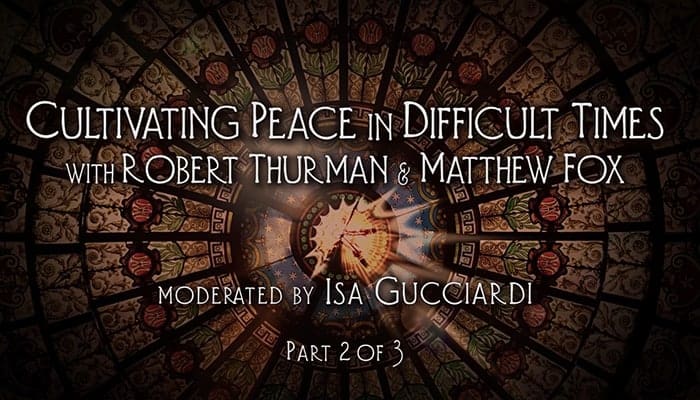
Video: Robert Thurman and Matthew Fox: Cultivating Peace in Difficult Times (Part 2)
In part two of this historic conversation, Buddhist scholar Robert Thurman and Christian theologian Rev. Matthew Fox discuss their experience as monastics in their respective traditions, and what we can learn from societies throughout history that have been largely peaceful. Referencing the great teachers who have influenced them, they dive into a thoughtful and often humorous examination of how we might cultivate peace in our time. Robert Thurman is the co-founder of Tibet House U.S., bestselling author, and recognized worldwide as an authority on religion, spirituality, Asian history, Tibetan Buddhism, and the Dalai Lama. Matthew Fox is an expert on Christian mysticism and Creation Spirituality and the bestselling author of The Coming of the Cosmic Christ. This talk takes place at the Sacred Stream Center, a school for consciousness studies in Berkeley, CA.
On the Air: Inner Truth Podcast: Isa Gucciardi, Ph.D.: Discover Your Shamanic Superpowers
What lies beyond the world we can see with our eyes?
The answer is a lot more than you might think!
There is a language hidden in the world of things seen, that can help us to understand what is really going on in the world around us.
Shamanism is one of the ways we can see through and integrate the physical and spiritual planes of existence.
It is one of the oldest wisdom traditions known to man and having fallen temporarily onto the fringe of popular culture, it is now becoming popular again amongst a generation of people keen to learn indigenous wisdom and reconnect with spirit.